Poieno Meaning: Real Roots, Fake Word — What “Poieno” Actually Is (and Isn’t)
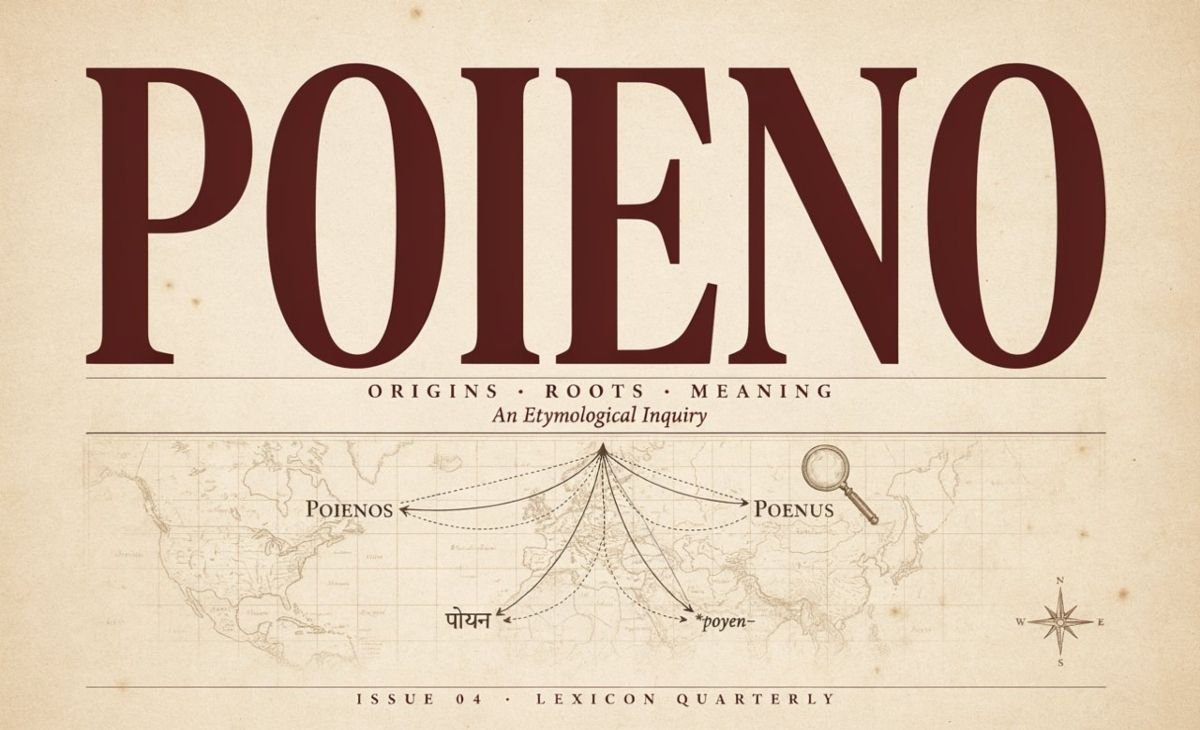
Search “poieno” and you’ll find dozens of articles describing it as an “emerging concept” about creativity, purposeful action, and turning ideas into results — often tied to the Ancient Greek verb poieō. Some go further, describing a “Poieno lifestyle philosophy,” a Romanian meadow connection, an Italian word for “full,” and even a family surname with a documented migration history to Brazil and Italy. Almost none of this holds up. Poieno is not an attested word in Greek, Romanian, Italian, or any other language — it doesn’t appear in any dictionary, classical text, or genealogical record. What is real is the language it borrows from. This article separates the two.
The Short Answer
Poieno is not a documented word in any language. It doesn’t appear in Greek, Romanian, or Italian dictionaries, and no linguistic authority has confirmed it as a genuine term. It’s best understood as an invented word that loosely echoes two real linguistic roots — the Ancient Greek verb poiein (“to make” or “to do”) and, in some articles, the Romanian noun poiană (“meadow” or “forest clearing”) — without being an actual derivative of either.
What’s Actually Real: Poiein and Poiesis
The genuine linguistic material behind all of this is solid. Poiein (ποιεῖν) is a well-documented Ancient Greek verb meaning “to make,” “to do,” or “to produce.” It’s the root behind real, established English words: poem, poet, and poetry all trace back to it. The related noun poiesis (ποίησις) describes the process of bringing something new into being, and has a genuine, ongoing life in philosophy and literary theory, where it’s used to describe creative or generative production.
None of this is in dispute. Poiein and poiesis are real, their meanings are well established, and their influence on Western literature and philosophy is genuinely documented across classical and modern sources.
What’s Not Real: “Poieno” Itself
The problem is that “poieno” doesn’t actually appear as a word derived from poiein in any Greek dictionary or classical text. It’s not a conjugated form, a noun form, or a documented variant — it simply doesn’t show up in the historical record. Articles describing it as an “ancient Greek word” or saying it was “used by philosophers like Aristotle” are stating something that isn’t supported by any actual Greek-language source.
Some articles compound the issue by adding more unrelated “roots” to strengthen the impression of a real word: the Romanian word poiană (meadow), the Italian word pieno (full), and others. Stacking multiple unrelated linguistic coincidences onto an undocumented word doesn’t make it more real — if anything, it’s a sign of an invented term casting around for plausible-sounding connections after the fact, rather than a genuine word with one clear, traceable origin.
The Invented “Poieno Family” Claim
Beyond the word itself, at least one widely circulated piece of content takes this further, claiming “Poieno” is also a real surname with a documented migration history, including families who moved to Brazil and Italy. No dictionary, census record, or genealogical database supports this. It appears to be an entirely fabricated backstory layered on top of an already-undocumented word — the kind of embellishment that can make invented content feel more credible by adding specific, checkable-sounding detail (a country, a migration story) that doesn’t actually hold up when checked.
Why So Many Sites Describe the Same Non-Word Differently
Looking across the articles currently ranking for “poieno,” the descriptions genuinely diverge: some frame it as a philosophical concept about creativity and personal growth, others as a specific “lifestyle philosophy” involving hands-on craft activities like cooking and woodworking, and at least one adds an entire invented family history. A single, genuine word — even a rare or emerging one — usually attracts converging descriptions once multiple sources cover it, since they’re all describing the same underlying fact. Diverging, incompatible definitions across sources are a stronger indicator that no shared, verified reference point actually exists.
How These “Emerging Concept” Articles Get Made
Framing an invented word as an “emerging concept” rather than claiming it’s an established dictionary term is a subtler version of the same content pattern seen with other fabricated or unverified terms. It’s harder to definitively debunk a vague, evolving “concept” than a false factual claim, which makes this framing convenient for generating search-friendly content around a term with no real substance behind it. The repeated hedges in some of these articles — “not officially confirmed,” “not formally established” — even function as a kind of built-in plausible deniability while still spending thousands of words building out the impression of a real, meaningful idea.
How to Evaluate a Term Like This
A few checks apply here just as they would to any unfamiliar word or “trending concept”:
- Check whether the word appears in an actual dictionary or academic reference for the language it’s claimed to come from — for Greek specifically, resources like the University of Chicago’s Logeion or Perseus Digital Library document real classical vocabulary and would show a genuine derivative of poiein.
- Be skeptical when multiple, unrelated language roots are stacked together to explain one word. A genuine loanword typically has one clear, traceable origin, not three or four coincidental resemblances across different language families.
- Treat specific, checkable claims — like a family surname or migration history — as things to actually verify, not accept because they sound concrete. Specificity isn’t the same as accuracy.
- Notice when sources hedge consistently (“not officially confirmed,” “not currently recognized”) while still building an elaborate framework around the term. That combination — heavy hedging plus heavy elaboration — is a pattern worth treating with real caution.
Final Thoughts
Poieno isn’t a documented word in Greek, Romanian, Italian, or any other language, despite the volume of content describing it as an emerging concept rooted in Ancient Greek philosophy. What’s genuinely real is poiein and poiesis — well-documented Greek terms behind English words like “poem” and “poetry,” with a legitimate history in philosophy and literary theory. If the idea of purposeful creation and turning ideas into action resonates with you, that’s a genuinely interesting concept — it just doesn’t need an invented word, or a fabricated family history, to be worth thinking about.
FAQs About Poieno
Is Poieno a real word?
No. It doesn’t appear in any Greek, Romanian, Italian, or English dictionary, and no linguistic authority has confirmed it as a documented term.
Is Poieno connected to Ancient Greek?
Not directly. It superficially resembles the real Greek verb poiein (“to make” or “to do”), but poieno itself isn’t a documented derivative of that word in any classical Greek source.
What are poiein and poiesis?
Both are genuine, well-documented Ancient Greek terms. Poiein means “to make” or “to do”; poiesis describes the process of bringing something new into being. Both are the real root behind English words like “poem” and “poetry.”
Is there really a “Poieno family” with a documented history in Brazil and Italy?
No. This claim doesn’t appear in any dictionary, census, or genealogical record. It appears to be a fabricated addition to an already-undocumented word.
Why do articles about Poieno describe it so differently?
Because it isn’t a genuine, established term with one shared, verifiable meaning. Different content sources appear to have generated their own independent descriptions, resulting in inconsistent, sometimes contradictory framing across sites.