Posterior Auricular Lymph Nodes: Causes, Symptoms, and When to See a Doctor
Finding a lump behind the ear can be alarming, but in most cases it isn’t a sign of anything serious. One of the most common explanations is swelling in the posterior auricular lymph nodes — a small but important part of the body’s immune system located just behind the ear. This article explains what these lymph nodes are, what can cause them to swell, other possible causes of a lump in that area, and when it’s time to see a doctor.
What Are the Posterior Auricular Lymph Nodes?
Lymph nodes are small, bean-shaped structures found throughout the body that form part of the immune system. Their job is to filter fluid and trap harmful substances such as bacteria, viruses, and abnormal cells, helping the body fight infection.
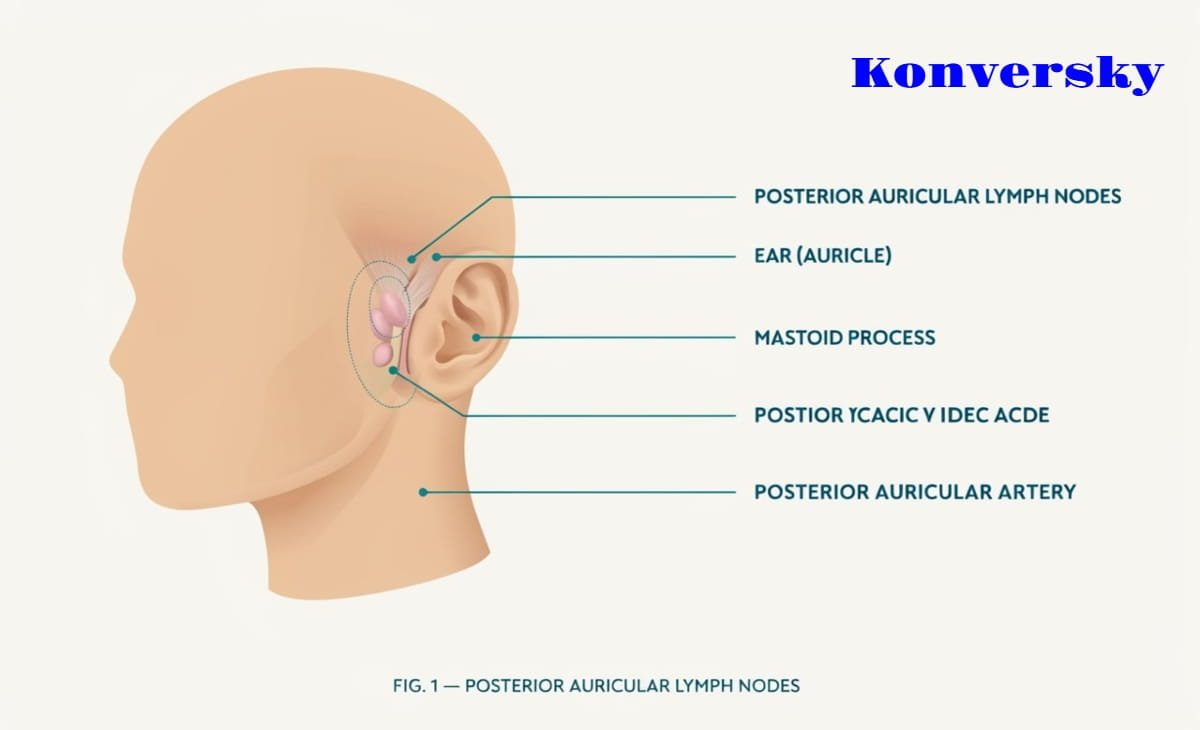
The posterior auricular lymph nodes sit just behind the ear. Like other lymph nodes, they can become swollen and noticeable when the body is responding to an infection or irritation nearby.
Common Causes of Swollen Posterior Auricular Lymph Nodes
Swelling in this area is usually a sign that the immune system is actively responding to something, rather than a condition in itself. Common triggers include:
- Infections of the ear, scalp, or mouth
- Broader systemic infections, such as mononucleosis
- Skin conditions affecting the scalp or nearby skin
- Dental infections or issues
- Less commonly, certain cancers, including lymphoma
Because so many of these causes are common and treatable, a swollen lymph node behind the ear is far more often linked to an infection than to anything serious.
Other Possible Causes of a Lump Behind the Ear
Not every lump in this area is a swollen lymph node. Several other conditions can also cause a lump to form behind the ear.
Acne
Acne doesn’t only affect the face — blocked pores behind the ear can also become inflamed and form a lump. This happens when oil and dead skin cells clog a pore, and bacteria cause infection and swelling. These lumps are often tender when pressed and may respond to standard acne treatments such as topical or oral antibiotics and retinoids.
Cysts
Skin cysts are fluid-filled sacs that can develop anywhere on the skin, including behind the ear. They typically appear as a smooth, raised bump and can often be moved slightly under the skin. Epidermoid cysts, a common type, tend to form near oil-producing glands and are usually harmless, though they can be removed if they cause discomfort.
Lipomas
A lipoma is a soft, benign lump made of fatty tissue that can develop under the skin in various parts of the body, including behind the ear. Lipomas are usually painless unless they press against a nearby nerve, and removal is typically optional rather than medically necessary.
Mastoiditis
Mastoiditis is a bacterial infection of the mastoid bone, the part of the skull located behind the ear. It’s more common in children and tends to produce a tender, swollen lump, sometimes pushing the ear outward. It can also come with ear discharge, hearing changes, fever, and general malaise. Because mastoiditis is a serious infection, it typically requires prompt treatment with antibiotics, and in some cases, surgical drainage.
Cancer
Though far less common than the other causes, a lump behind the ear can occasionally indicate cancer, often a form of skin cancer, or in some cases lymphoma affecting the lymph nodes themselves. Cancerous lumps tend to grow over time, may change in shape or color, and are often firm and fixed in place rather than movable.
You May Also like this: Alexander Kutner: Everything About The Private Son of Journalist Kay Burley
Symptoms That Often Accompany a Lump
The nature of a lump behind the ear can offer clues about its cause. Signs worth paying attention to include whether the lump is painful, discharges fluid, feels fixed rather than movable, changes size or shape over time, or appeared suddenly. General symptoms like fatigue, night sweats, or fever alongside the lump are also worth mentioning to a doctor.
When to See a Doctor
It’s a good idea to see a doctor for any new or changing lump behind the ear, particularly if it is painful, growing, fixed in place, or accompanied by other symptoms such as fever or unexplained fatigue. While most causes are benign and treatable, only a medical evaluation can confirm what’s actually causing the lump.
How Doctors Diagnose the Cause of a Lump
A doctor will typically begin with a physical examination, assessing the size, texture, and mobility of the lump, along with a review of any related symptoms and medical history. Depending on the findings, further testing such as an ultrasound or a biopsy — where a small tissue sample is taken for lab analysis — may be recommended to confirm a diagnosis.
Final Thoughts
A lump behind the ear can have many possible explanations, ranging from common and harmless causes like acne, cysts, or reactive lymph node swelling, to less common conditions like mastoiditis or, rarely, cancer. Most cases turn out to be minor and resolve with little or no treatment. Still, any new, painful, or changing lump is worth having checked by a doctor to rule out anything more serious and get appropriate treatment if needed.
FAQs
When should I worry about swollen lymph nodes behind my ear?
It’s worth seeing a doctor if a swollen lymph node behind the ear keeps growing or doesn’t go away over time. Most swollen lymph nodes are caused by common, treatable conditions rather than cancer.
How do you treat a swollen lymph node behind your ear?
Treatment depends on the underlying cause. Many cases linked to minor infections improve with rest, fluids, and over-the-counter pain relief, while others may require antibiotics or further medical treatment.
Why is my lymph node swollen behind my ear?
Common causes include infections of the ear, scalp, mouth, or teeth, as well as skin conditions and, less commonly, certain cancers.
Is it normal to have a lump behind your ear?
Some lumps are simply part of a person’s natural ear or skull shape. However, any newly appearing lump is not typical and should be discussed with a doctor.
Should I worry about a hard lump behind my ear?
A hard, fixed, irregularly shaped lump behind the ear warrants a doctor’s visit, as these characteristics can sometimes be associated with cancer, though many hard lumps turn out to have benign causes as well.